

🍿 Get the Daily on Spotify, too
Quick takes:
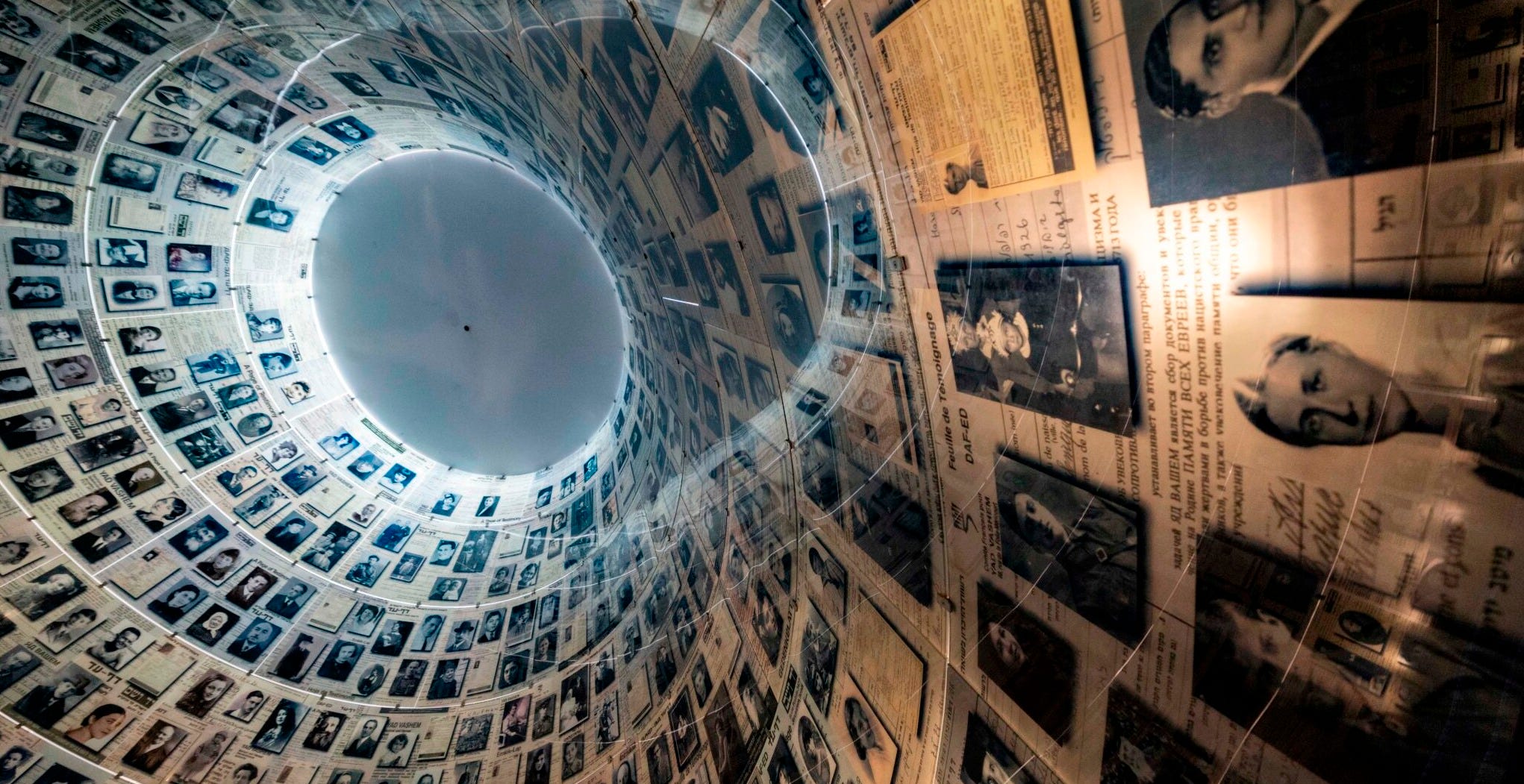
Macro: On Holocaust Remembrance Day, there are 111,000 survivors living in Israel, reported by the Central Bureau of Statistics and the National Insurance.
Tech & Geopolitics: Israeli tech-NGO CyberWell reports a spike in AI-generated antisemitic propaganda.
Opinion: Israel's rise from the ashes of 1945 to a global tech titan is a story of an incomplete liberation.
Honoring the survival, ditching the siege mentality in the economy

The Jewish people’s ability to forge a hyper-modern, $500 billion economy from the ashes of 1945 is arguably the most successful sovereign wealth narrative in modern history, a stark economic anomaly when viewed against the macroeconomic realities of our regional neighbors. As the nation reflects today on its historic journey from the ashes of the Holocaust to an era of unprecedented sovereign prosperity, financial analysts turn a critical eye toward the structural inefficiencies holding back the domestic market.
For the Israeli citizen, it remains an incomplete economic liberation. To understand why the local consumer currently pays a staggering 30% premium above the OECD average for basic goods, foreign investors must look beyond standard inflationary metrics and recognize a severe structural deficiency: the domestic market remains a heavily insulated walled garden, sustained by the lingering, protectionist mental models of its socialist origins.
The early state was founded on the principles of a command economy, a paternalistic survival mechanism forged by extreme geopolitical isolation, capital scarcity, and the collective trauma of the Holocaust. The early mandate was economic independence at all costs.
This siege mentality birthed an architecture of massive state-backed monopolies, heavily subsidized agricultural syndicates, and a deeply entrenched labor bureaucracy. It was an economic model built for national survival, inherently hostile to foreign competition and completely reliant on centralized control.
However, when the macroeconomic stabilization plan of 1985 finally broke hyperinflation and opened the capital accounts, the resulting capitalist revolution was wildly asymmetric. The liberalization birthed the globally integrated, hyper-competitive tech hub that foreign investors know today, an export-facing tech and defense juggernaut operating with borderless, frictionless efficiency. But that same free-market revolution never fully penetrated the non-tradable domestic sectors. The supermarket aisles, the seaports, the commercial banks, and the domestic supply chains were deliberately left behind, shielded by political cowardice and intense lobbying.
Instead of true liberalization, the socialist mental model merely mutated. The centralized control of the early state didn’t disappear into a free market; it was simply privatized. The government sold off state assets but failed to dismantle the barriers to entry, effectively transferring absolute market power into the hands of a few private cartels, legacy conglomerates, and exclusive importers.
While Israel’s export-driven high-tech and defense sectors operate in a hyper-competitive, globalized free market, generating massive foreign direct investment (FDI), the internal consumer economy operates under an entirely different paradigm.
Domestic industries, ranging from food imports to retail and commercial banking, remain heavily concentrated. A handful of legacy conglomerates control the supply chains, insulated by complex regulatory barriers, high import tariffs, and a bureaucratic infrastructure that inherently favors domestic incumbents over foreign disruptors.
Today, this dynamic manifests as textbook regulatory capture, and its mathematical derivative, structural corruption. In any lingering socialist architecture where bureaucrats, union bosses, and legacy gatekeepers dictate the flow of capital, corruption ceases to be a bug and becomes a feature.
Nowhere is this more glaringly evident today than in the enduring stranglehold of the Histadrut (Israel’s national labor federation) and the remaining state-backed monopolies. Entities like the seaports and the Israel Electric Corporation continue to function as autonomous political fiefdoms. Shielded from true free-market forces, they normalize rampant nepotism, operational extortion, and weaponized strikes aimed at securing bloated payrolls, holding the national supply chain hostage under the guise of “workers’ rights.”
Simultaneously, private gatekeepers weaponize bureaucratic red tape and bespoke local standards to block parallel imports and stifle foreign direct investment (FDI) in the retail and commercial sectors. Together, these entities leverage their artificial moats to extract extreme rent-seeking profits and bloated EBITDA margins from a completely captive populace.
And by the way, New Jewish demographic data released ahead of Holocaust Remembrance Day tells us that there are 15.8 million Jews worldwide, with 7.2 million living in Israel - 45%. Of those in Israel, 111,000 are Holocaust survivors. A staggering shift from 1939, when the global Jewish population was 16.6 million, but only 3% lived in Mandatory Palestine.

Of the Holocaust survivors living in Israel 106,880 survivors receive official stipends. Furthermore, 31% of the survivor population requires supplemental income support to maintain a basic standard of living. With groceries 30% higher than the OECD average, many survivors also face food insecurity.
The survival and prosperity of the state on the global stage are undeniably secure, but true free-market emancipation at home remains blocked. This monopolistic extraction creates a massive deadweight loss on the economy, suffocating middle-class disposable income and stifling domestic SME growth. Until the political echelon is willing to aggressively pursue antitrust enforcement and tear down the lingering, protectionist mental models of its socialist past, the Israeli domestic economy will remain a gilded cage, where a world-class tech sector inadvertently subsidizes the rent-seeking of legacy oligopolies.
In an OECD-leading technology and defense exporter that is still actively subsidizing the survival of its founding generation, severe income disparities continue to fracture the domestic economy and the foundations of our future.
Tech & geopolitics: The GenAI arms race on antisemitism
According to a new report from Israeli tech-NGO CyberWell, generative AI (GenAI) is fundamentally altering the landscape of digital information warfare. Data reveals a massive weaponization of AI during the current geopolitical crisis.
Following the start of the US-Israel joint offensive against the Iranian regime on February 28, 2026, antisemitic and Holocaust-denial posts on X (formerly Twitter) surged by 474% compared to the daily average, peaking at 3,843 posts on day one.

CyberWell's CEO, Tal-Or Cohen Montemayor, notes that GenAI has drastically lowered the barriers to entry for hostile actors to produce synthetic, news-style propaganda. These actors are increasingly utilizing deepfakes, coded language, and AI-generated humor to systematically bypass the automated content moderation guardrails of major social media platforms.
Our take: This data highlights an accountability vacuum in the borderless era of digital warfare. As Silicon Valley algorithms fail to contain the GenAI arms race and international regulators move too slowly to counteract state-sponsored bot farms, a profound geopolitical reality emerges: Israel is the only sovereign state on earth tasked with acting as a global cyber-guardian for a multinational diaspora.
While traditional nation-states govern only within their physical borders, Israel’s security doctrine inherently extends to monitoring and combating antisemitism aimed at the 8.6 million Jews living abroad.
This is a modernized lesson of the Holocaust. The mandate of 1945 was that the Jewish people could never again rely on the benevolence of foreign governments, or today, the efficacy of Big Tech moderation teams for their protection. Just as Israel built a $500 billion economy and a world-class military to secure its physical sovereignty, it is now forced to leverage its tech sector to police the borderless frontiers of the internet.
TASE snapshot for Monday, April 14, 2026
TA-35 Index (TASE:TA35): 🟢 +1.55%
TA-90 (TASE:TA90): 🟢 +1.02%
TA-125 (TASE:TA125): 🟢 +1.45%
If you enjoyed this update, forward it on.
TV10 Global | Israel for Investors
Bringing you the top stories from the Israeli business community, by Israel’s only business and finance network.
Share your thoughts with us via: global@tv10.co.il or the Newsroom WhatsApp: +972-55-994-5851.
📧 Subscribe to this newsletter! And follow the daily conversation on 𝕏 @tv10global.
Pings available via WhatsApp Channel.
Disclaimer: This brief is for informational purposes only and does not constitute investment advice. All data current as of publication date.


