

🍿 Get the Daily on Spotify, too
Quick takes:
Capital Markets: The Tel Aviv Stock Exchange (TASE) has capped off a breakout first quarter, with the benchmark TA-35 Index surging approximately 15% year-to-date
Macro: The Ministry of Education will initiate a phased return to in-person learning on April 12; Defense Minister Katz nominated current CEO Boaz Levy to become IAI’s new Chairman.
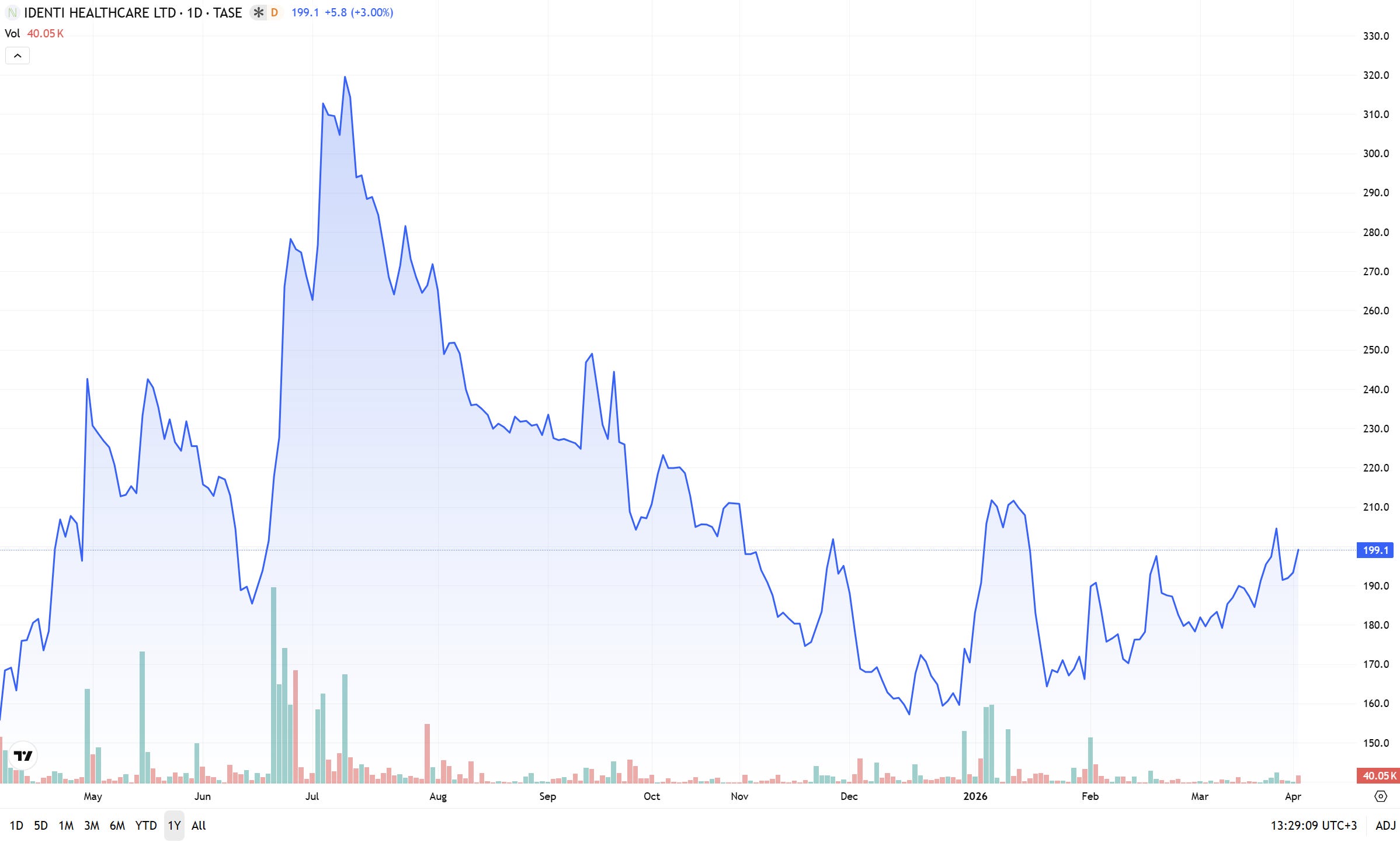
Healthcare: Identi Healthcare shares rallied following a new AI documentation contract with US-based Onvida Health.
Capital Markets
The Tel Aviv Stock Exchange (TASE) has capped off a breakout first quarter, with the benchmark TA-35 Index surging approximately 15% year-to-date to test the 4,248 level. This massive domestic rally stands in stark contrast to broader global equities, dramatically outperforming both the S&P 500 and major European indices, which have slipped into negative territory over the same period.

Daily trading volumes have rebounded to a robust ₪3.2 billion. This sustained rally is underpinned by two major structural shifts: the historic transition to a Monday-Friday trading week, which has successfully unlocked foreign institutional liquidity by eliminating the weekend risk gap, and a fierce resurgence in public offerings, with Q1 IPO capital raises hitting a staggering ₪21 billion.
Macro
All working parents in Israel are wondering - when are the kids finally going back to school? As planned Passover holidays come to a close, the government has approved a framework to gradually resume in-person schooling starting Sunday, April 12. The reopening, championed by Education Minister Yoav Kisch and approved by PM Benjamin Netanyahu, remains contingent on localized security assessments by the IDF’s Home Front Command.
Our take: While framed as an educational directive, this is fundamentally a macroeconomic and labor market story. Hundreds of thousands of parents have faced severe productivity constraints due to rolling school closures and remote learning protocols, with mothers particularly affected. A stable return to in-person schooling is an absolute prerequisite for normalizing domestic economic output and stabilizing the active workforce participation rate, which has faced severe volatility since the onset of the war.

With a highly anticipated Tel Aviv IPO on the horizon, there may be a new Chairman of the Board for Israel Aerospace Industries. Defense Minister Israel Katz and Regional Cooperation Minister Dudi Amsalem have nominated current Israel Aerospace Industries (IAI) CEO Boaz Levy to serve as Chairman of the Board. Levy, a 30-year veteran who spearheaded the Arrow and Barak 8 missile defense systems, led the state-owned firm to record financial heights, including a $6B export deal for the Barak system. The nomination requires approval from the Senior Appointments Advisory Committee. Crucially, Minister Katz explicitly stated that Levy’s mandate will include advancing the IPO of IAI on the TASE and expanding the firm’s global footprint.
Our take: The formal push to IPO Israel Aerospace Industries is far more than a capital markets event; it is a critical macroeconomic maneuver. Floating a 25% to 30% minority stake of a defense behemoth valued between $21 billion and $27 billion provides immediate, non-dilutive liquidity to a state treasury strained by prolonged, multi-front war expenditures.
From an operational perspective, transitioning to a publicly traded entity is existential for IAI’s growth. It allows the firm to circumvent the draconian public-sector salary caps dictated by the Budget Foundations Law, enabling equity-based compensation to stem the bleed of top-tier AI and aerospace engineering talent to private rivals like Elbit Systems. Furthermore, creating tradable equity arms IAI with the M&A agility required to consolidate its footprint across North American and European markets.
However, institutional allocators may need to price in profound structural friction before participating. The most immediate headwind is the classification paradox, balancing the strict reporting and transparency mandates of the TASE with the highly classified nature of IAI’s aerospace and cyber-warfare divisions.
More critically, with the government retaining a 70% supermajority, minority shareholders will face a perpetual conflict of interest. The State’s mandate is national survival, not ROE or dividend yields. In a geopolitical crisis, the government holds the leverage to force IAI to pivot toward low-margin or at-cost domestic military production, potentially cannibalizing the highly profitable export contracts that make up its record $29 billion backlog.
Combined with the lingering leverage of a notoriously powerful labor union and deep local currency exposure, where revenues are booked in dollars and euros but operational overhead is tied to the shekel, the risk profile is steep. Ultimately, buying into the IAI float may offer a rare, pure-play exposure to surging global sovereign defense budgets, but investors must accept the big caveat: you are taking a junior position to the security needs of the State.
Tech & Healthcare

Shares of Identi Healthcare (TASE: IDNT), a med-tech firm specializing in AI-driven inventory management and data-capture solutions for surgical environments, surged following the announcement of a $390,000 contract with Arizona-based Onvida Health.
By leveraging artificial intelligence and machine learning, Identi's platform automates the tracking of medical implants and high-value consumables in real-time. This effectively bridges the gap between the operating room and a hospital's central ERP systems, reducing supply chain leakage, eliminating manual data entry, and ensuring highly accurate surgical billing.
The Arizona deal covers the deployment of 20 of its flagship ‘Snap&Go’ systems and Smart Weighing Bins across the hospital’s operating rooms. The company also disclosed an additional $700,000 in pending orders from another US hospital network, marking a significant expansion of its commercial AI footprint in the North American market.
Our take: Identi’s expansion underscores the sustained appetite in the US healthcare sector for operational efficiency tools, particularly those leveraging AI/ML to reduce supply chain leakage and automate surgical billing. While the nominal deal size is relatively modest, the sharp positive market reaction reflects broader investor confidence in the local med-tech sector’s ability to successfully penetrate and scale within the highly lucrative, barrier-heavy US hospital ecosystem.
TASE snapshot for Tuesday, April 7, 2026
TA-35 Index (TASE:TA35): 🟢 +1.41%
TA-90 (TASE:TA90): 🟢 +0.52%
TA-125 (TASE:TA125): 🟢 +1.19%
If you enjoyed this update, forward it on.
TV10 Global | Israel for Investors
Bringing you the top stories from the Israeli business community, by Israel’s only business and finance network.
Share your thoughts with us via: global@tv10.co.il or the Newsroom WhatsApp: +972-55-994-5851.
📧 Subscribe to this newsletter! And follow the daily conversation on 𝕏 @tv10global.
Pings available via WhatsApp Channel.
Disclaimer: This brief is for informational purposes only and does not constitute investment advice. All data current as of publication date.


