

Quick takes:
Deals and TASE: Palo Alto Networks is set to become the Tel Aviv Stock Exchange’s most valuable company - announcing today that it will dual-list in Tel Aviv, as it closes its $25B acquisition of CyberArk.
Legislation: The Knesset advances the ‘R&D Law,’ seeking to keep Big Tech in Israel. Plus, the Knesset Finance Committee debates a 5-year tax exemption for new immigrants (Olim); The Tax Authority advances ₪800 million in work grants.
Real Estate: Israel Canada acquires 50% of the Galilion and Kfar Giladi hotels for ₪142.5 million; Mehadrin raises ₪253 million in bond issuance with demand hitting ₪350 million.
Energy & Infrastructure: Shikun & Binui Energy signs a massive 860 MWh battery deal; Prime Energy buys 55 solar facilities; Baran Group signs an €85 million EPC contract for a power plant in Central Asia.
Israeli tech: Camtek bags $25 million order for AI chip inspection; Matia raises $21 million Series A; Backslash Security secures $19 million Series A; and FINQ launches the first US ETFs managed solely by AI (reporting by Reuters).
Deals
Palo Alto Networks (NASDAQ: PANW) has completed its acquisition of CyberArk and announced it will dual-list on the Tel Aviv Stock Exchange under the ticker CYBR.
At a $115 billion market cap, Palo Alto becomes the largest company traded on the TASE.
The move reinforces Palo Alto’s Israeli R&D center, already its largest outside Silicon Valley, as a global innovation hub for AI-era security. This is a landmark for the TASE. A $115B American giant choosing Tel Aviv as its second home sends a signal that Israel’s cyber ecosystem is more than just an acquisition target.
Legislation
The Knesset Finance Committee began deliberations today on a ₪3 billion tax incentive package supposedly aimed at preventing a mass exodus of multinational R&D centers.
The OECD’s ‘Pillar Two’ reform, approved in Israel for the 2026 tax year, mandates a global minimum 15% corporate tax rate. This neutralizes Israel’s historical advantage of offering single-digit tax rates to tech giants like Intel and Nvidia. Intended to keep tax revenue in Jerusalem rather than Washington, the Ministry of Finance is proposing a “Qualified Refundable Tax Credit” (QRTC). Israel says it will tax such companies at 15%, but return a percentage of the tax paid as R&D grants.
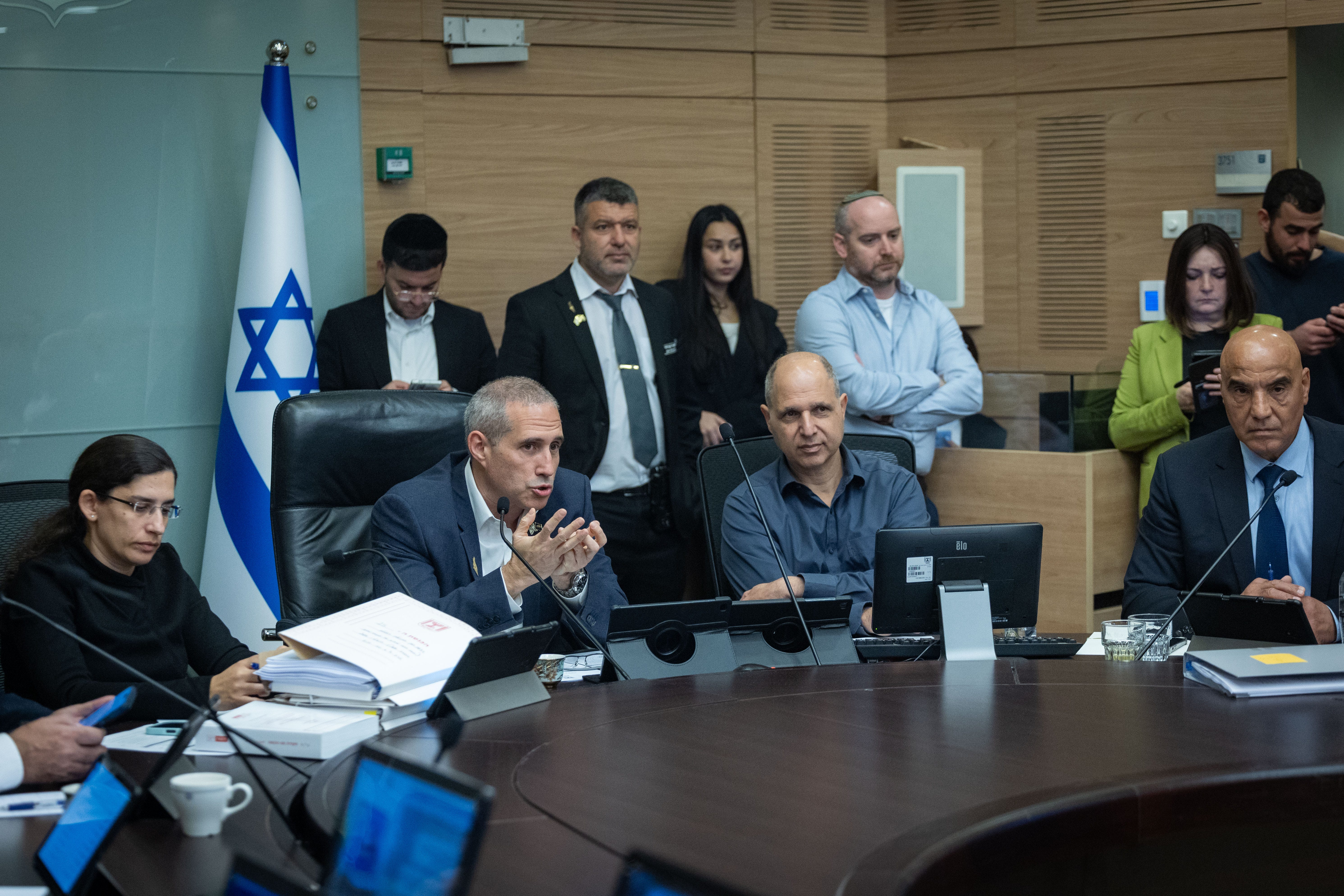
Our take: This isn’t a “benefit” but rather a defensive maneuver. Multinationals account for 20% of GDP. If Israel doesn’t match the global incentives, the cost-benefit analysis of maintaining an R&D center in Tel Aviv, already strained by the war and high salaries, might collapse.
The Knesset Finance Committee is also debating a new incentive package for 2026 immigrants, a topic we did an explainer on, here. The measure in question is a small, but new, tax exemption on Israeli-sourced income for 5 years for new immigrants and returning residents. As we wrote earlier,
The central mechanism of the incentive is a temporary, five-year exemption on a portion of income earned from work in Israel, with the maximum exemption amount decreasing annually from one million NIS in 2026-2027 to 150,000 NIS by 2030. The new tax break supplements existing benefits and specifically aims to motivate recipients to move their active professional and business operations to Israel.
Questions remain - will this measure help attract 28,000 immigrants in 2026 (up from 25,000), will it succeed in generating ₪1.6 billion in economic activity over that time period? More questions, than answers.
Critics of the move warn that the strict 2026 deadline for arrivals unfairly skips those who arrived immediately post-October 7, betting on Israel in her darkest hour.
And finally, in a move to support low-wage earners, the Tax Authority is advancing the final ₪800 million payment of the 2024 ‘Work Grant’ (being called a ‘negative income tax’) to 300,000 eligible citizens tomorrow.
Real Estate
Israel Canada (TASE:ISCN) is buying the dip in northern tourism, disregarding current security tensions to acquire 50% stakes in two iconic properties.
Video credit: Kfar Giladi Hotel
This is a combined investment of ₪142.5 million for half-ownership of the Kfar Giladi (₪77.5M) and Galilion (₪65M) hotels. CEO Reuven Alkes is betting on a post-war travel boom, expanding the portfolio to 41 hotels (4,552 rooms) and locking in assets in the Upper Galilee and Hula Valley at wartime valuations.
Mehadrin (TASE:MEDN) is successfully pivoting from citrus to concrete, leveraging the market’s confidence in parent Delek Group (TASE:DLEKG) with a quarter-billion shekel bond issuance. Demand spiked to ₪350 million in the institutional phase, allowing the company to upsize the bond issuance to ₪253 million.
Secured at a 5.25% unlinked interest rate with a 4-year duration. Proceeds are earmarked for ~500 residential units in high-demand areas (Ashdod, Hadera, Ra’anana), accelerating the agricultural giant’s transformation into a residential developer.
Energy & Infrastructure
Shikun & Binui Energy (TASE:SBEN) is charging up, signing a strategic deal with Blilious Energy (BLEnergy). A long-term agreement for the supply and maintenance of 860 MWh of battery storage capacity. This deal pushes the company’s total storage backlog past 1,300 MWh, solidifying its position as a dominant player in the grid stabilization market. The batteries are slated for 2026-2027 installation across high-voltage projects, including critical infrastructure in the Gaza Envelope.
Prime Energy (TASE:PRIM) is acquiring 55 active solar facilities (9.7 MW) for ₪26.2 million. This is 100% debt-financed via a bank loan at Prime + 0.5%. The assets are expected to generate ₪6.5 million revenue and ₪3.5 million EBITDA in year one. The stock rose 5.5% as investors liked the immediate cash flow accretion and the plan to add storage to these sites.
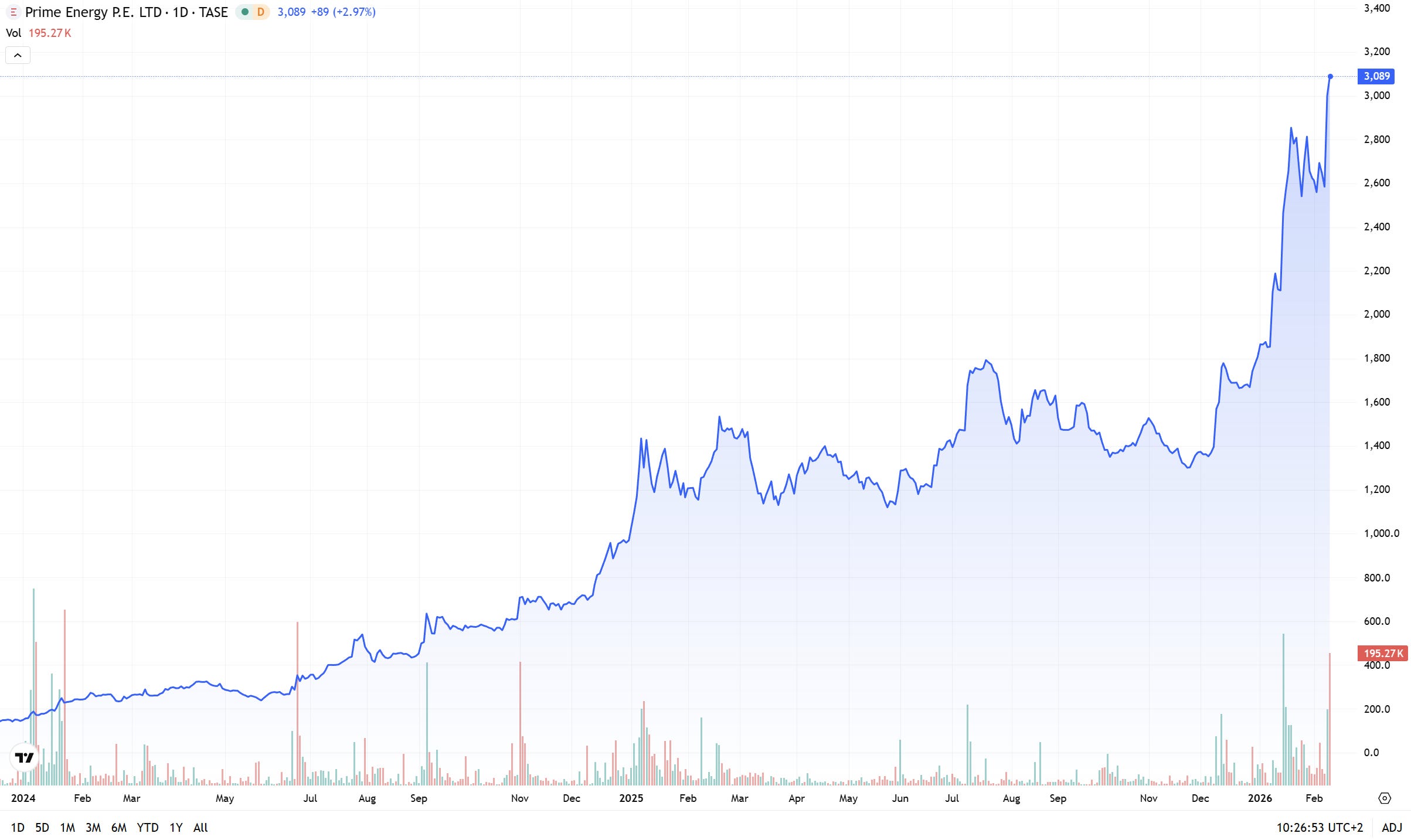
Our take: Prime Energy is effectively executing a ‘roll-up’ strategy, buying fragmented solar assets using cheap leverage to build scale. With the stock up significantly this week following insider buying, the market is validating the pivot from pure developer to asset aggregator.
Baran Group (TASE:BRAN) continues its global expansion with a major win in Central Asia. The deal is an €85 million EPC (Engineering, Procurement, Construction) contract to build a 50MW cogeneration plant (power & heat) for a capital city.
This follows a €100M win in Eastern Europe in November, reinforcing CEO Itzik Frank’s strategy to export Israeli engineering expertise to emerging markets modernizing their aging grid infrastructure.
Tech
Camtek (TASE:CAMT) received a $25 million order for its ‘Hawk’ systems from a Tier-1 IDM (Integrated Device Manufacturer). This brings total recent orders from this specific customer to $45 million. The ‘Hawk’ system is critical for inspecting High Bandwidth Memory (HBM), the physical backbone of the AI revolution. CEO Rafi Amit noted this positions Camtek to ride the wave of accelerating AI infrastructure investment.
Two startups raised substantial capital today to solve the ‘plumbing’ and security problems created by Generative AI:
Matia raised $21 million Series A led by Red Dot Capital. Their platform unifies data engineering workflows, replacing fragmented tools to make enterprise data ‘AI-ready.’ Total funding reached $31 million.
Backslash Security raised $19 million Series A led by KOMPAS VC. They focus on securing vibe coding. Ronen Zoran, former CRO of CyberArk (NASDAQ:CYBR), joins the board.
And- Reuters reported that FINQ (NYSE: AIUP, AINT) has entered the US market with two ETFs managed solely by artificial intelligence, aiming to replace human ‘fear and greed’ with a pure ‘data-only’ ranking system.
While CEO Eldad Tamir promises superior decision-making, history is littered with AI funds that churned portfolios into oblivion. Morningstar analyst Bryan Armour warns that previous attempts saw turnover rates hit 2,000%. The question isn’t if the AI can trade, but if it can beat the index after fees and tax-inefficient churn. (Full story by Steven Scheer and Suzanne McGee, Reuters).
Appointments
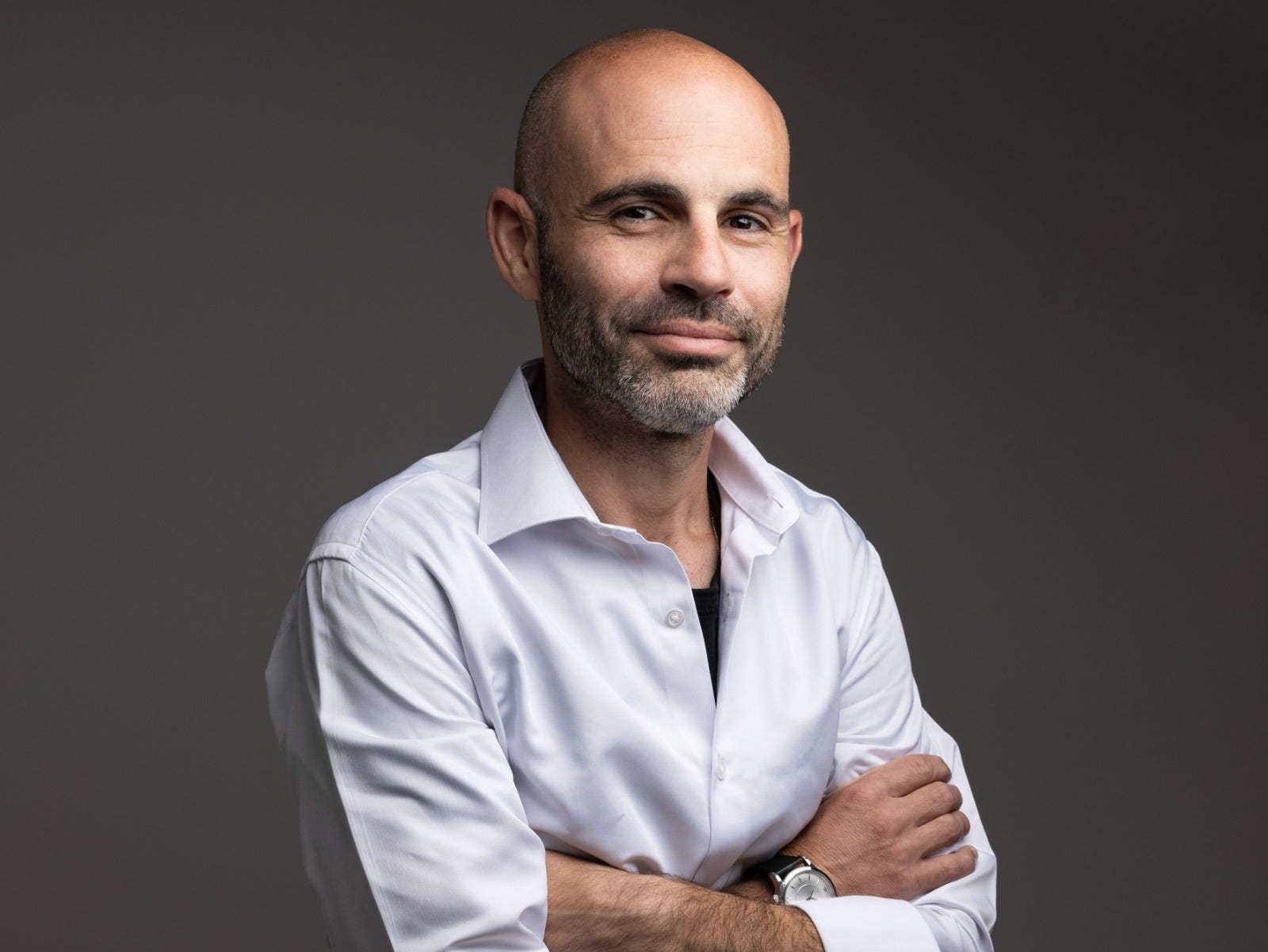
Israeli serial entrepreneur Zeevi Michel has been appointed General Partner of a new €200 million fund for major European VC Elaia. The firm has been active in Europe for the last 20 years and has had a presence in Israel since 2021.
Michel told TV10, “The new fund will continue to support the Israeli tech eco-system in addition to continental Europe, making investments in B2B Tech companies from pre-seed to series B with tickets from €1-15M.”
TASE snapshot for Wednesday, Feb. 11, 2026
TA-35 Index (TASE:TA35): 🔴 -0.79%
TA-90 (TASE:TA90): 🔴 -0.42%
TA-125 (TASE:TA125): 🔴 -0.62%
If you enjoyed this update, forward it on.
TV10 Global | Israel for Investors
Bringing you the top stories from the Israeli business community, by Israel’s only business and finance network.
Share your thoughts with us via: global@tv10.co.il or the Newsroom WhatsApp: +972-55-994-5851.
📧 Subscribe to this newsletter! And follow the daily conversation on 𝕏 @tv10global.
Pings available via WhatsApp Channel.
Disclaimer: This brief is for informational purposes only and does not constitute investment advice. All data current as of publication date.


