

For more details, read our daily editions from Monday to Wednesday - and now, get our video and audio updates on Spotify Monday-Thursday!
Israel is running multiple energy transitions simultaneously: securing new offshore gas reserves, building grid capacity for AI-era demand, accelerating renewables in post-war zones, and attempting to become a regional trading hub. The policy ambition is clear. Whether execution can keep pace -particularly on the 10-to-12-year grid infrastructure timeline - is the question the market will be watching.
Inside this spotlight:
Israel’s Ministry of Finance publishes landmark recommendations on AI server farm energy policy
Dalia Energy signs a 25-year, 130MW server farm deal in Ashdod
Ministry of Energy launches fifth offshore gas exploration round
Natural Gas Authority advances plans for a domestic gas trading exchange
Enlight gets government authorization for two 150MW agro-voltaic projects in the Gaza Envelope
Energix posts a tough 2025 but guides for revenue growth in 2026
Gasoline prices rise 14 agorot per liter from March 1
AI meets the grid: Israel’s server farm problem

A standard 50-megawatt server farm consumes as much electricity as a neighborhood of 10,000 homes. Building one takes a few years. Building the grid infrastructure to support it takes 10 to 12. That gap is the core of a new Ministry of Finance report published this week, which lays out interim recommendations for managing the collision between AI infrastructure demand and Israel’s electricity sector.
The policy response centers on geographic decentralization - pushing new server farms toward the periphery, closer to solar production centers and away from the congested center of the country. The report also calls for a cleanup of the application queue, where speculative filings are currently blocking real projects from getting grid connection approvals.
Dalia Energy and the 130MW data center in Ashdod
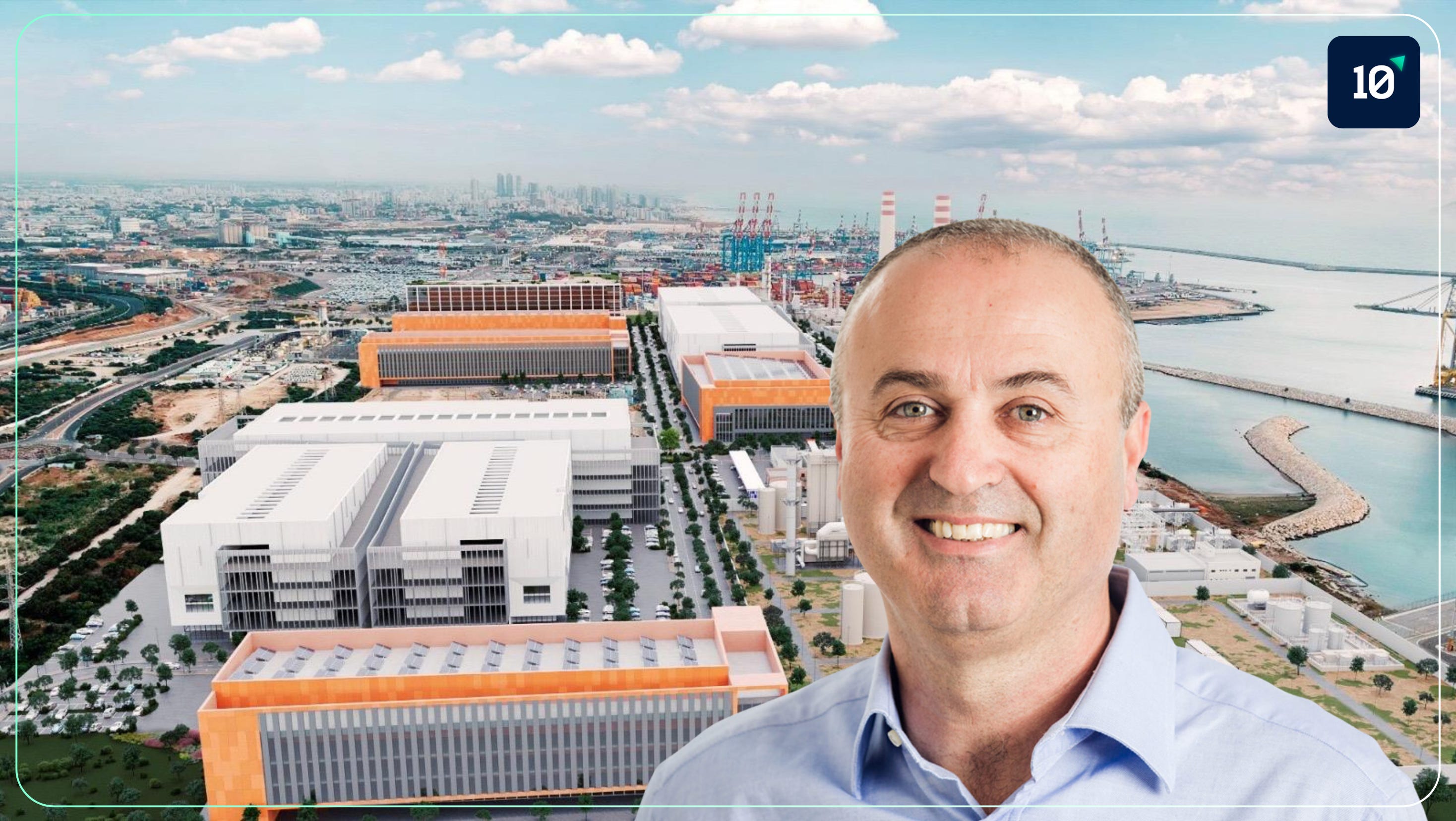
The same week the government published its server farm policy, a concrete deal landed that shows exactly where the market is heading. Dalia Energy - through its subsidiary Eshkol Energies, part of the Meshek Energy group (TASE:MSKE) - signed a memorandum of understanding with the Israel Infrastructure Fund and international operator Serverfarm to build a 130-megawatt server farm at the Eshkol complex in Ashdod.
₪30-50 million: Projected annual rental fees
24 years, 11 months: Lease duration
30%: Option for Eshkol Energies to enter as a project partner
~6.8%: Meshek Energy share price jump on announcement
What makes this site compelling beyond the numbers: it sits adjacent to an existing power plant, uses seawater cooling from its coastal location, and is simultaneously advancing a submarine cable landing station that would connect it directly to international communications infrastructure spanning Europe, Africa, and the Middle East.
Fifth offshore gas exploration round announced
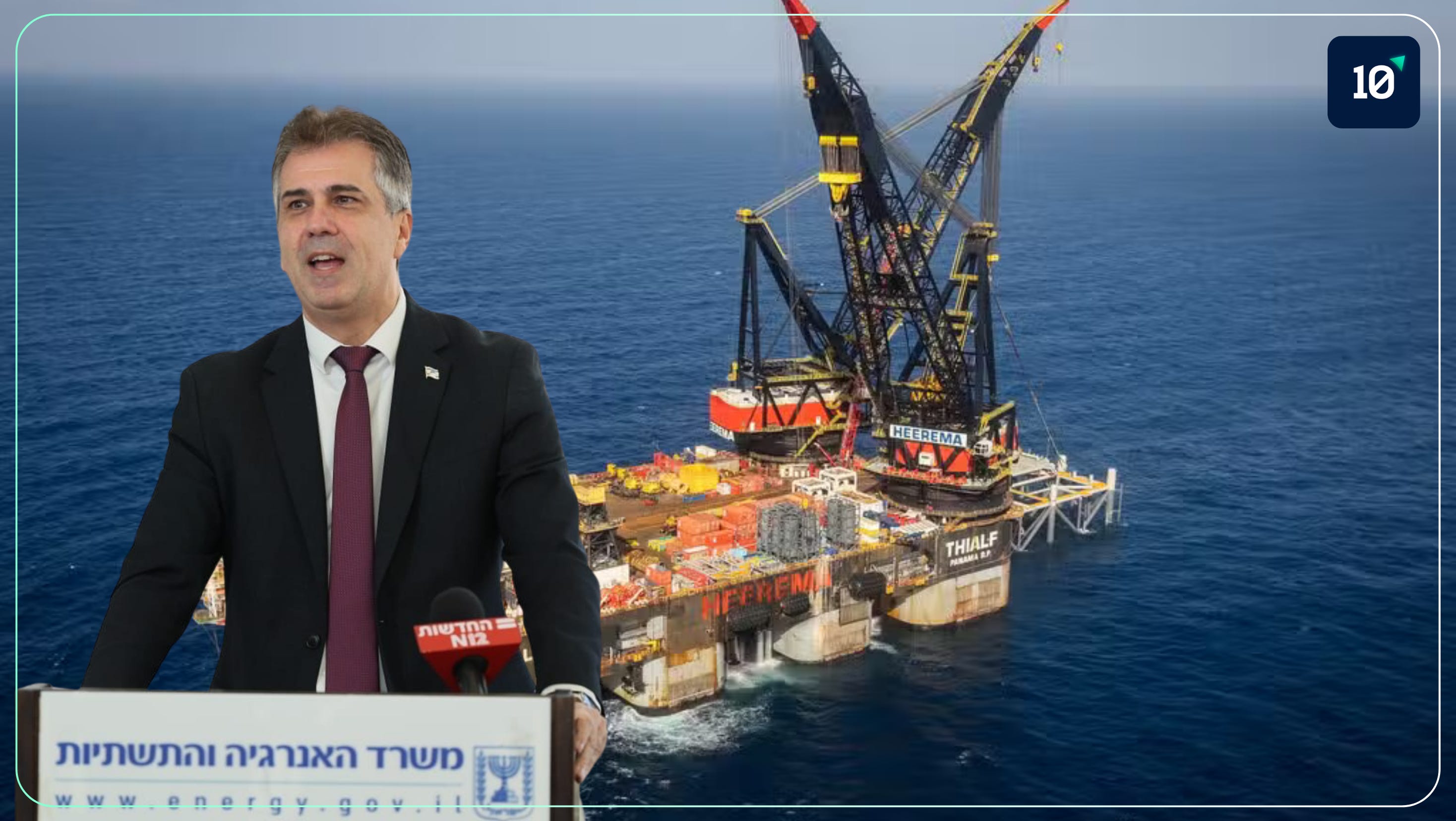
The Ministry of Energy launched its fifth competitive round for natural gas exploration in Israeli Mediterranean waters this week. Six blocks covering approximately 8,600 square kilometers are on offer, with the ministry estimating that hundreds of additional BCM - billion cubic meters - of undiscovered gas may exist in unexplored geological layers.
Israel’s existing offshore fields, primarily Leviathan and Tamar, already supply domestic demand and export to Egypt and Jordan. A significant new discovery would meaningfully expand Israel’s position as a regional energy exporter - which is increasingly the government’s stated strategic goal.
A gas trading exchange

The Natural Gas Authority is advancing plans for a domestic marketplace where companies can buy and sell surplus natural gas. They’ve been consulting with FGSZ, Hungary’s national transmission operator, which runs a similar platform. The longer-term ambition is to position Israel as a regional gas trading hub, leveraging its existing pipeline infrastructure and geographic location between Europe, Africa, and the Middle East.
Enlight: agro-voltaic projects in the Gaza Envelope
The government authorized Enlight Renewable Energy (TASE:ENLT) to advance two large agro-voltaic projects in the communities surrounding Gaza, part of the Tekoma post-war reconstruction effort. Agro-voltaic means solar panels installed above active farmland, allowing simultaneous energy and agricultural production.
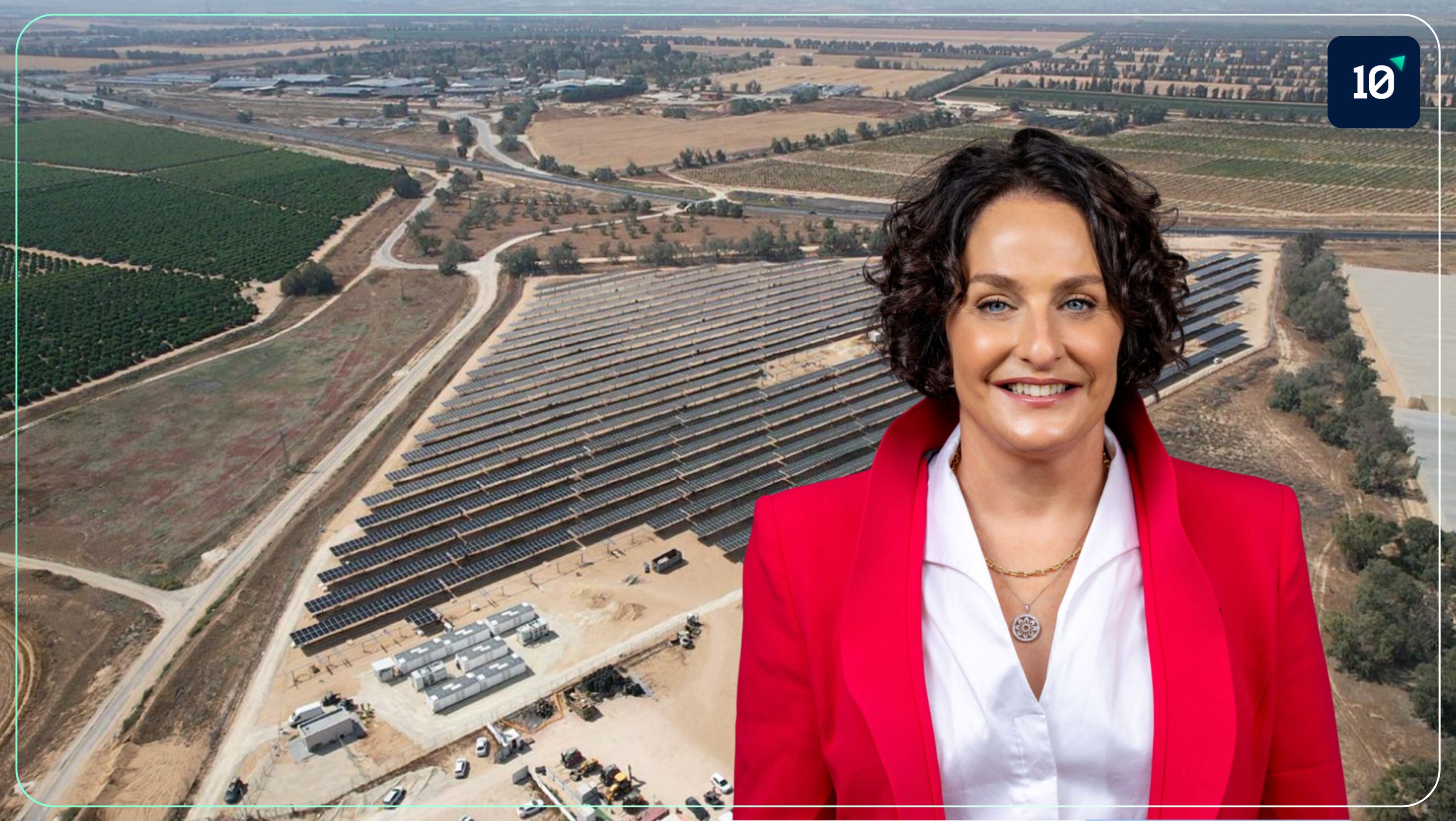
2,500 dunams: Area of each project (roughly 625 acres)
~150MW + storage: Capacity of each project
2030: Government target of 30% renewable electricity generation, which these projects support
Energix: tough 2025, strong 2026 guidance
Energix (TASE:ENRG) reported full-year 2025 results this morning. Revenue fell 15% to ₪762 million and EBITDA dropped 27%, driven by weak wind conditions in Poland, hedging effects, and shekel strength. None of it is structural. The stock is up 35% year-to-date.
₪1.28-1.37 billion: 2026 revenue guidance
₪1.1-1.19 billion: 2026 EBITDA guidance
3.5 GW + 1.7 GWh: Current project backlog connected or under construction\
The company is also aggressively expanding in the US, negotiating to acquire at least 2 gigawatts of projects in the PJM grid - one of North America’s largest electricity markets.
Gasoline prices up from March 1
A liter of 95-octane at a self-service station rises to ₪7.02 - up 14 agorot - effective midnight Saturday. The Ministry of Energy cited security and geopolitical tensions driving international oil price premiums.
TV10 Global | Israel for Investors
Bringing you the top stories from the Israeli business community, by Israel’s only business and finance network.
Share your thoughts with us via: global@tv10.co.il or the Newsroom WhatsApp: +972-55-994-5851.
📧 Subscribe to this newsletter! And follow the daily conversation on 𝕏 @tv10global.
Pings available via WhatsApp Channel.
Disclaimer: This brief is for informational purposes only and does not constitute investment advice. All data current as of publication date.


