

🍿 Get the Daily on Spotify, too
Quick takes:
Geopolitics: Iranian strikes on Gulf desalination plants expose the extreme physical fragility of the region’s critical water supply.
Macro: Israel’s trailing 12-month deficit shrinks to 4.7% as state tax revenues surge 21%, proving profound structural resilience amidst a multi-front conflict.
Banks: Israel’s ‘Big 5’ banks print a combined ₪32 billion in 2025 net profit, placing their windfall firmly in the crosshairs of aggressive Ministry of Finance taxation.
Regulation: The Knesset advances a structural reform breaking the banking sector’s monopoly on financial guarantees, injecting non-bank liquidity into credit markets.
Editor’s Note
Global capital is currently witnessing the legacy architecture of the Middle East buckle under intense kinetic friction. As the Strait of Hormuz remains effectively paralyzed, the recent strikes on Bahraini water facilities have exposed a rapid-onset existential crisis for the Gulf’s primary urban centers. This shift reveals that the region’s economic engine, despite its outward opulence, is essentially a high-beta trade with zero structural hedge. When desalination plants become tactical targets, the underlying vulnerability of the entire Gulf model is laid bare.
In stark contrast, Israel is aggressively managing its sovereign balance sheet as a strategic deterrent. By simultaneously shrinking its national deficit and deregulating its credit markets, the state is signaling an attempt to decouple from regional volatility. This fiscal hardening allows the Israeli economy to effortlessly absorb geopolitical shockwaves that would otherwise paralyze its neighbors, transforming a high-intensity conflict into a demonstration of institutional stability and liquidity.
Ultimately, the market is repricing the Levant through a new lens of sovereign resilience versus infrastructure fragility. While the Gulf’s wealth remains tethered to vulnerable physical nodes, Israel’s pivot toward a deregulated, high-tech-driven credit economy is creating a fortress balance sheet. Investors could potentially diversify away from the monolithic Middle East risk profile, instead favoring the outlier that can responsibly fund a multi-front war while tightening its fiscal belt and expanding its financial reach.
Geopolitics
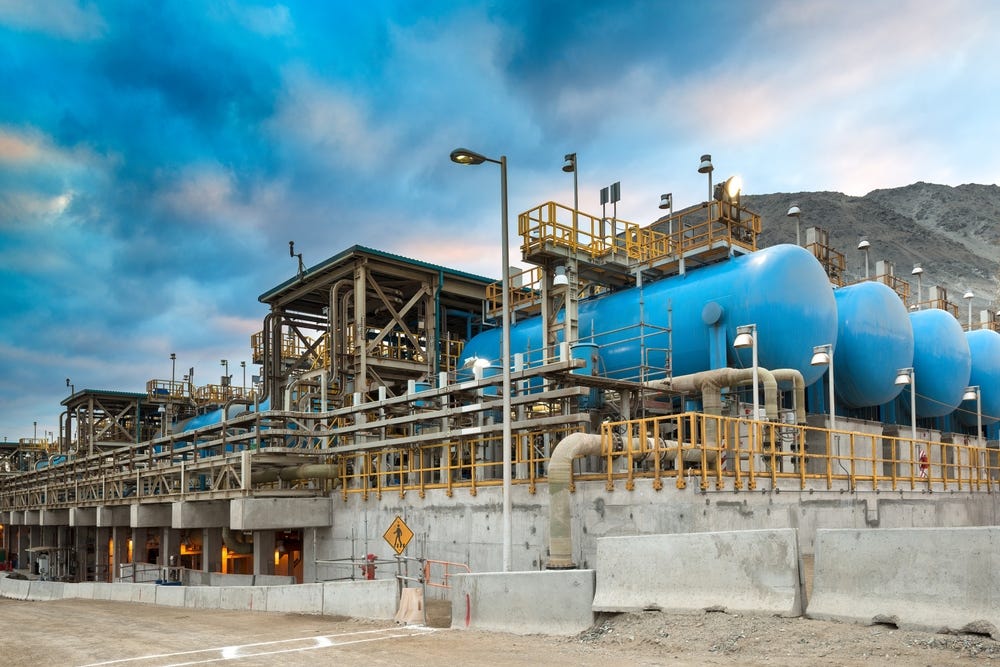
Gulf states are facing an unprecedented asymmetric shock as Iranian drones target critical water desalination infrastructure in Bahrain. With the Gulf relying almost entirely on energy-intensive desalination to sustain its rapidly expanding populations and luxury hubs in 50-degree Celsius heat, these facilities represent the ultimate single point of failure.
Compounding the physical risk, Saudi Arabia, the world’s largest producer of desalinated water, operates with a strategic reserve capable of sustaining the country for merely half a day.
This kinetic friction exposes the fundamental fragility of the Gulf’s economic architecture. Placing highly concentrated desalination plants alongside exposed coastal energy infrastructure creates an undefended vector for cascade failure. Any substantial disruption to this supply chain transitions instantly from an economic inconvenience to a sovereign survival crisis, forcing the Gulf states to confront an immediate, existential threat to their baseline habitability.
Our take: This is another example of how the Gulf’s tranquility premium narrative is collapsing. Institutional allocators must now price in the extreme physical duration risk of a region where a single drone swarm can neutralize the water supply of a multi-billion-dollar financial hub.
Macro
While Operation Roaring Lion is currently the primary driver of national expenditure, the Israeli state entered the campaign with a fortress balance sheet that far exceeded expectations. The Ministry of Finance reported a February 2026 deficit of just ₪2.2 billion, a massive drop from the ₪5.9 billion recorded a year prior. This pre-war fiscal discipline drove the trailing 12-month deficit down to 4.7% of GDP, providing the critical liquidity cushion required for the massive flyovers currently targeting Tehran.
The underlying driver of this compression was a robust 21% surge in state revenues, totaling ₪47.8 billion for February. This revenue spike, fueled by a 22% rise in direct tax collection and a 70% surge in capital market levies, confirms that the domestic economy was firing on all cylinders just as the order was given to launch the war.
Our take: This data completely invalidates the legacy Levant Tax thesis. Israel is absorbing the upfront kinetic costs of a regional war while simultaneously deleveraging its deficit-to-GDP ratio through organic, private-sector growth. For sovereign debt markets, Tel Aviv might be proving to be the only regional asset class capable of structural shock absorption without defaulting to unchecked, inflationary deficit spending. Time will tell.
Banks
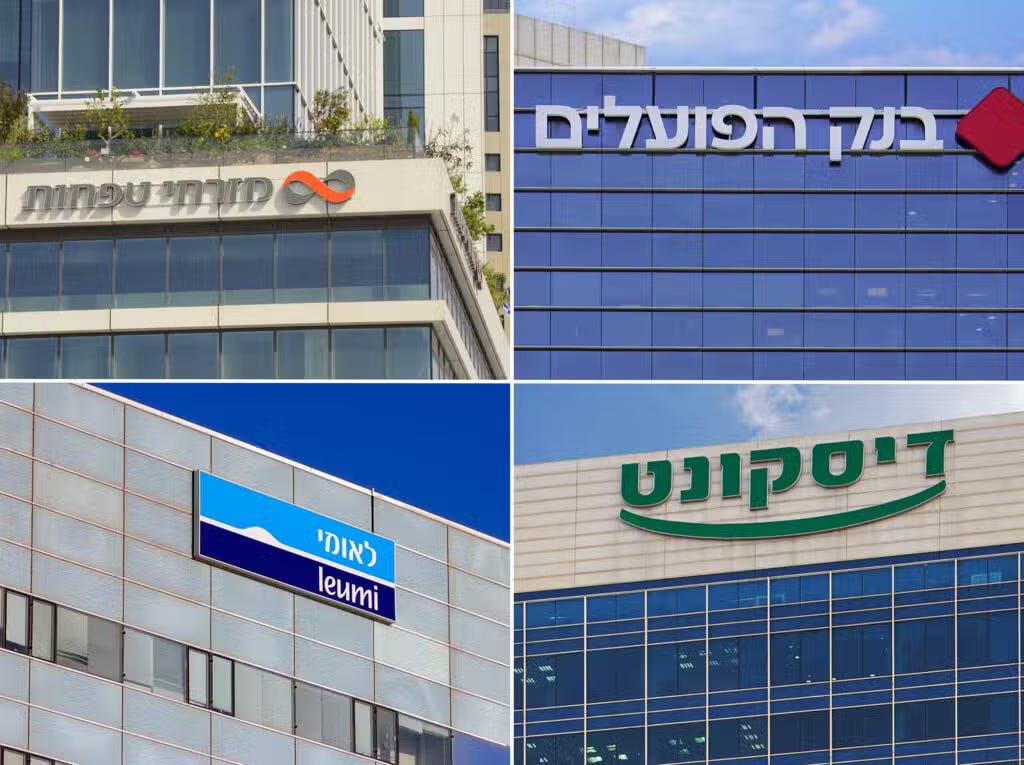
Israel’s banking oligopoly - Bank Leumi (TASE:LUMI), Bank Hapoalim (TASE:POLI), Mizrahi-Tefahot (TASE:MZTF), Discount (TASE:DSCT), and First International Bank of Israel (TASE:FIBI) - has officially closed out 2025 with a staggering combined net profit of roughly ₪32 billion. Despite the intense geopolitical headwinds of the past year, the TA-Banks 5 Index has still surged approximately 7% since the start of 2026.
Bank Leumi led the pack, posting a record ₪10.3 billion in net profit, while Mizrahi-Tefahot delivered a sector-leading Return on Equity (ROE) of 17%. Hapoalim also posted a remarkably strong year, clearing ₪9.8 billion and easily beating its early-year financial targets.
However, this profound profitability is drawing aggressive regulatory crosshairs. The Ministry of Finance is currently advancing a structural reform through the Knesset’s Finance Committee to levy a 15% special windfall tax on the banks’ excess profits over the next five years. The Treasury argues that the high-interest-rate environment has effectively quadrupled the banks’ baseline earnings, making them a prime target for state revenue generation.
Regulation
The Knesset’s Economics Committee has advanced a critical structural reform within the 2026 Economic Arrangements Law, designed to finally systematically dismantle the traditional banking sector’s monopoly on financial guarantees. Historically, a highly concentrated banking oligopoly has exclusively controlled the issuance of these guarantees, bottlenecking tens of billions of shekels required for massive real estate, infrastructure, and municipal tenders.
The new legislation legally permits non-bank financial institutions to issue commercial guarantees. By introducing heavyweight institutional capital from prominent investment houses and insurance conglomerates, such as Meitav (TASE:MTAV) and Altshuler Shaham (TASE:ALTF), into the commercial guarantee sector, the state is actively reducing friction for developers. This fundamentally deregulates a credit chokepoint that has historically constrained rapid infrastructure development.
Our take: This could be a calculated macroeconomic liquidity pump. By breaking the banking monopoly on project guarantees, the Ministry of Finance is intentionally engineering a more competitive, decentralized credit market. Institutional capital should view this as a massive de-risking of the Israeli real estate and infrastructure pipeline, ensuring capital deployment scales rapidly the day after Operation Roaring Lion.
TASE snapshot for Wednesday, March 10, 2026
TA-35 Index (TASE:TA35): 🔴 -0.92%
TA-90 (TASE:TA90): 🔴 -1.90%
TA-125 (TASE:TA125): 🔴 -1.17%
If you enjoyed this update, forward it on.
TV10 Global | Israel for Investors
Bringing you the top stories from the Israeli business community, by Israel’s only business and finance network.
Share your thoughts with us via: global@tv10.co.il or the Newsroom WhatsApp: +972-55-994-5851.
📧 Subscribe to this newsletter! And follow the daily conversation on 𝕏 @tv10global.
Pings available via WhatsApp Channel.
Disclaimer: This brief is for informational purposes only and does not constitute investment advice. All data current as of publication date.


