

🍿 Get the Daily on Spotify, too
Quick takes:
Macro: Israel’s current account surplus shrank to $8.9 billion in 2025, while the economy attracted a staggering $39 billion in foreign investments.
Defense & Tech: Greece greenlit a €3 billion (₪10 billion) procurement of systems from Rafael and Israel Aerospace Industries; Elbit Systems posted record profits and a massive backlog, leading broader sector news that included milestone revenues for ONE Technologies and Hilan, and a strategic contract for RP Optical, and an R&D consolidation for BioLight.
Real Estate: The Chamber of CPAs and the Ministry of Finance are warning of systemic credit risks.
Editor’s Note
The macroeconomic fallout of Operation Roaring Lion is exposing a two-speed economy operating under severe structural friction. On one hand, we are witnessing a massive, countercyclical inflow of sovereign and institutional capital. A $26.2 billion surge in foreign direct investment and a localized equity market that just outperformed the S&P 500 by 4.6% during wartime proves that sophisticated global capital is aggressively buying the Israeli geopolitical risk premium. The defense and tech sectors have effectively become the nation’s ultimate macroeconomic shock absorbers, generating unprecedented cash flows that anchor the state’s balance sheet.
Conversely, the domestic real estate market is flashing severe localized credit warnings. A shadow banking dynamic is taking hold among developers who may be utilizing off-book financing to mask falling asset values and preserve their balance sheet covenants.
This places the Bank of Israel in an agonizing policy bind. Policymakers must contain mounting private-sector credit risks and prevent a wave of builder insolvencies without reigniting supply-side inflation, especially following a recent 43% spike in global Brent crude. It is a highly delicate surgical intervention where any mispricing of the baseline interest rate risks triggering a cascading credit failure among over-leveraged households and enterprises.
Macro
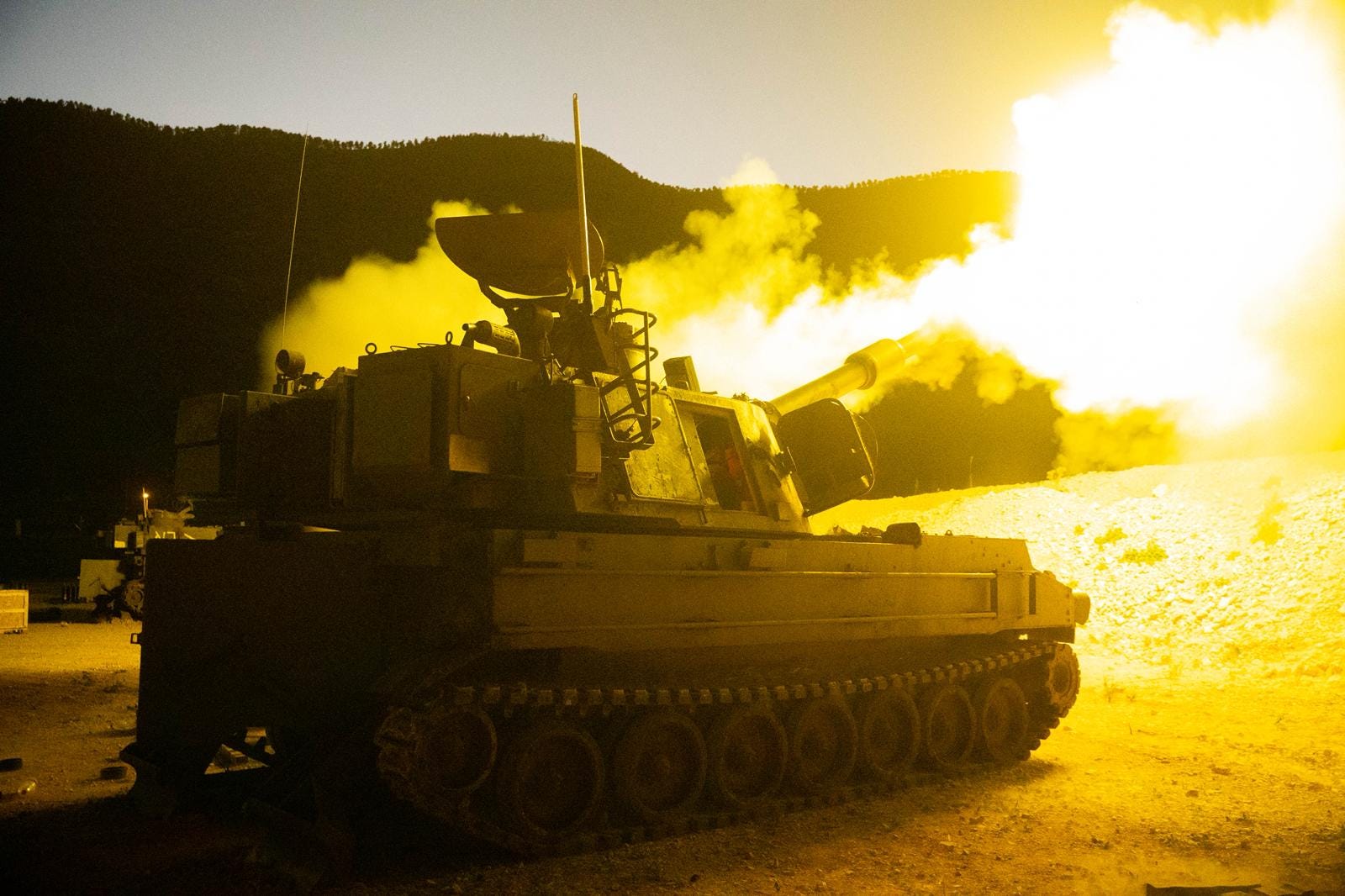
According to the Central Bureau of Statistics, Israel’s current account surplus shrank to $8.9 billion in 2025, reflecting the heavy operational costs of the ongoing war. However, foreign investments into Israel skyrocketed to $39 billion, including a $26.2 billion jump in direct investments and a $10.9 billion increase in tradable securities.
Simultaneously, a special analysis by the Israel Securities Authority (ISA) revealed that despite a dramatic 43% surge in global oil prices, the Tel Aviv Stock Exchange demonstrated extreme resilience. The TA-125 index generated an excess return of 4.6% over the S&P 500 during the first two weeks of the military operation. While foreign residents sold a net ₪2.7 billion, domestic institutional and retail liquidity easily absorbed the shock, deploying ₪1.8 billion into the market.
Our take: A $26.2 billion direct investment injection during a multi-front war proves smart global capital is aggressively buying the geopolitical discount. Domestically, the exchange is operating as an airtight macroeconomic shock absorber, with local institutions easily swallowing foreign sell-offs to clear the market.
Defense and Tech
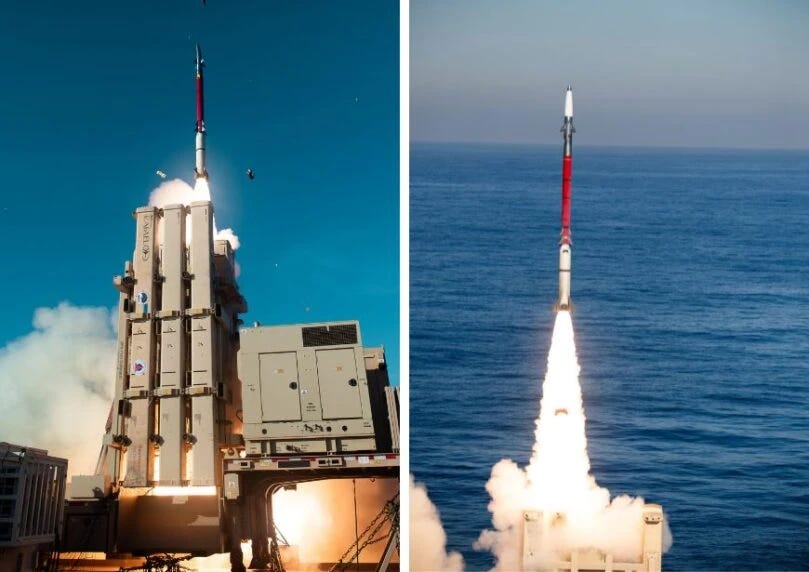
The local defense and tech sectors are taking unprecedented dividends from the current security climate. The Greek parliament just greenlit a €3 billion (roughly ₪10 billion) budget to procure a multi-layered air defense array from Israel as part of its Achilles Shield modernization program. Driven by escalating regional friction with Turkey and recent spillover strikes from Lebanon into Cyprus, Athens is acquiring David’s Sling and Spyder systems from Rafael, alongside Barak MX interceptors from Israel Aerospace Industries.
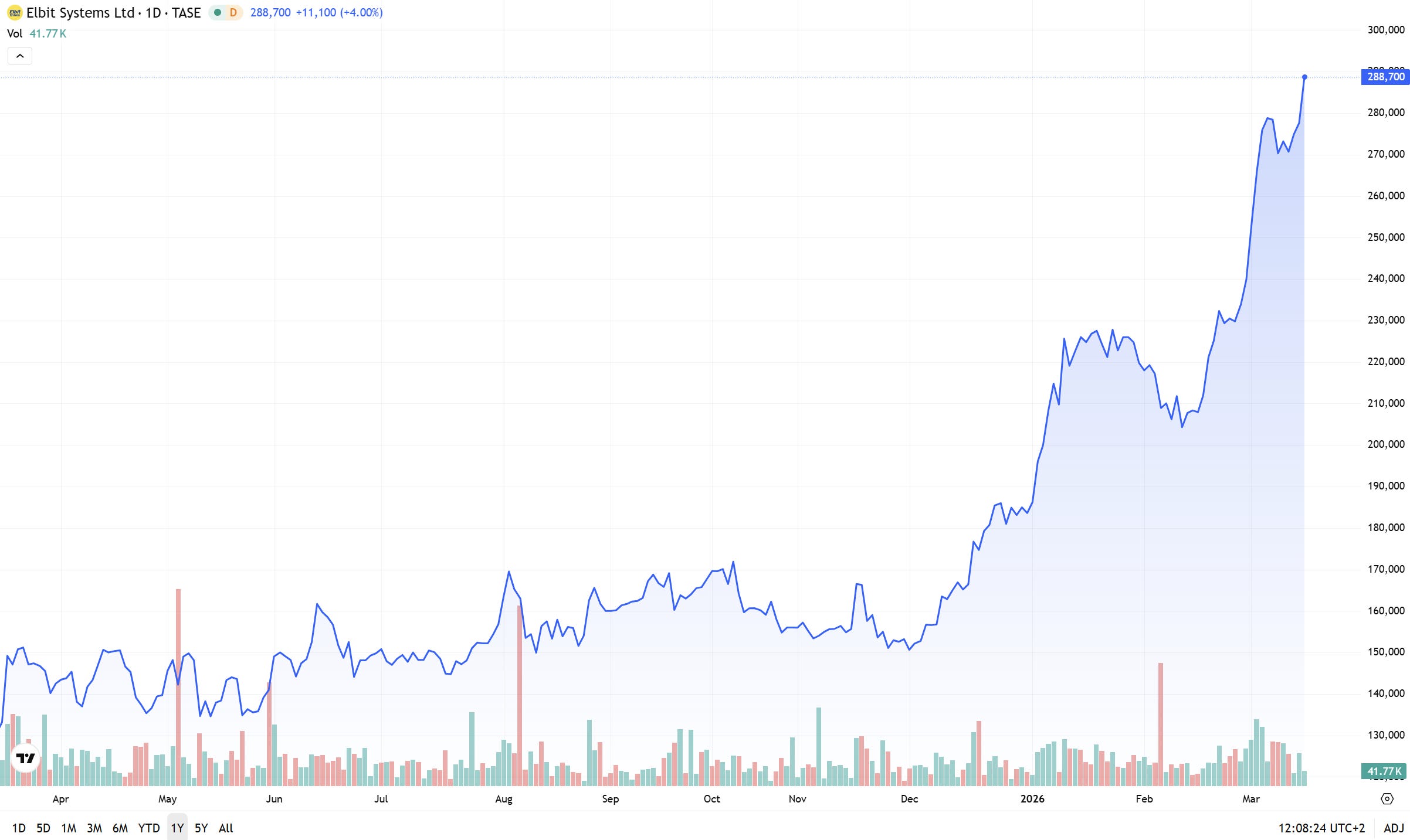
Elbit Systems (TASE:ESLT) closed 2025 with record-breaking momentum, posting full-year revenues of $7.93 billion (a 16.3% increase) and a net profit that surged 66.4% to $534 million. Q4 alone saw net profits increase of 87% to $168.2 million on $2.14 billion in revenue. The company is now sitting on a historic $28.1 billion order backlog, up 24.3% YoY, and will distribute a $1 per share dividend on April 27. The stock is up 10.95% today.
HiperGlobal (TASE:HIPR), a designer and integrator of tailored computing hardware for global tech OEMs, posted Q4 revenues of $71.6 million (up 11%) and is sitting on a massive $240 million backlog for 2026. A strong shekel compressed Q4 net profit to $4 million, but domestic revenue jumped 15% on fierce semiconductor and defense demand. The firm also acquired Europe’s Bressner, declared a $3.3 million dividend, and saw its stock climb 2.06%.
In the IT sector, enterprise heavyweight Hilan (TASE:HLAN) posted record FY25 revenues of ₪3 billion (up 6.1% YoY), driving an annual net profit of ₪263 million and expanding EBITDA to ₪488 million. Despite Q4 profits slipping marginally to ₪80 million due to shifting financing costs, top-line expansion easily absorbed severe shekel-dollar currency headwinds. The board announced a ₪46 million cash dividend, sending the stock up 5.05% today as the firm aggressively moves to capture the domestic AI market via its acquisition of Summit X, an AI-driven data conversion specialist.
Likewise, ONE Technologies (TASE:ONE) posted record revenues of ₪4.65 billion, crossed the ₪1 billion equity threshold, and announced a ₪42 million dividend.
RP Optical signed an $11 million strategic electro-optics deal with a major domestic defense client.
In biomed, BioLight (TASE:BOLT) is streamlining its ophthalmic drug R&D by consolidating assets into a new entity, OCUVIA, despite reporting an annual net loss of ₪11.7 million. The stock is up 2.92% today.
Our take: We are witnessing a structural paradigm shift. Today’s news prove that global militaries are aggressively pivoting from strategic intelligence procurement to massive kinetic warfare stockpiling. Israeli tech and defense firms are successfully translating the global arms race and enterprise IT modernization into a monstrous cash flow engine.
Real Estate

Severe warnings from the President of the Chamber of CPAs, Chen Schreiber, and the Chief Economist at the Ministry of Finance, Dr. Shmuel Abramzon, are exposing an acute credit risk in the construction sector. Contractors are quietly issuing deep, off-contract discounts, funding tens of thousands of shekels in rent for buyers, to artificially maintain the on-paper value of their inventory and appease bank lenders.
Meanwhile, actual new home sales crashed to a near-record low of 1,668 units in January. The cancellation rate doubled to 0.6% for 2025 contracts, with 562 deals from 2024 already terminated. Buyers who cannot complete purchases under highly leveraged ‘pay as you go’ (10/90) schemes are forfeiting their 10% deposits.
Our take: Could this be quiet macroeconomic fraud? The developers’ financial engineering is actively masking a real-terms price collapse, generating distorted credit metrics that mislead Bank of Israel policymakers. We are approaching a boiling point where consumer credit exhaustion, combined with choked developer cash flows (averaging just ₪400 million monthly), will force the central bank to price systemic risk into its next rate decision or risk a domino effect that could severely damage the balance sheets of the financing banks.
TASE snapshot for Wednesday, March 17, 2026
TA-35 Index (TASE:TA35): 🟢 +1.57%
TA-90 (TASE:TA90): 🟢 +1.85%
TA-125 (TASE:TA125): 🟢 +1.56%
If you enjoyed this update, forward it on.
TV10 Global | Israel for Investors
Bringing you the top stories from the Israeli business community, by Israel’s only business and finance network.
Share your thoughts with us via: global@tv10.co.il or the Newsroom WhatsApp: +972-55-994-5851.
📧 Subscribe to this newsletter! And follow the daily conversation on 𝕏 @tv10global.
Pings available via WhatsApp Channel.
Disclaimer: This brief is for informational purposes only and does not constitute investment advice. All data current as of publication date.


