

Quick takes:
Macro: Annual inflation fell to 1.8% in January; Israel’s trade deficit for goods reached ₪9.9 billion in January; Digital wallet payments hit a record ₪98.2 billion in 2025; High-tech job seekers surge 126% since 2022.
Infrastructure: ZIM to be acquired by FIMI Opportunity Funds and Germany’s Hapag-Lloyd for $3.7 billion; The government approved a historic National Master Plan for agro-voltaic facilities.
Tech: Predictive AI startup Simile raises $100 million
Regulation: Industry critics slam the Ministry of Economy’s NIS 50 million price-cap tender as populist.
Macro | Inflation down to 1.8%, rate cut coming?
The Central Bureau of Statistics (CBS) reports that the Consumer Price Index (CPI) fell by 0.3% in January 2026. This brings the annual inflation rate down to 1.8%, safely within the government’s 1%–3% target range. Notable price drops were seen in clothing (-3.9%) and transportation (-2.8%).
However, real estate continues to defy the cooling trend. Housing prices rose 0.8% in the November–December period, with a sharp 2.0% spike in Tel Aviv alone. New apartment prices also climbed 0.9%, even as government-subsidized deals fell to 36.7% of all new-build transactions.
With inflation now near the bottom of the target range and the shekel remaining stable, the Bank of Israel could decrease interest rates at next week's meeting.

The Central Bureau of Statistics (CBS) reports a widening trade deficit in goods, totaling ₪9.9 billion for January 2026. While exports reached ₪16.1 billion, anchored by industrial manufacturing, imports surged to ₪25.9 billion. A deeper look at the data reveals a significant 26.4% annual spike in the import of products like machinery and equipment between November 2025 and January 2026. On the export side, high-tech manufacturing remains the primary engine of growth, rising 11.8% on an annual basis.
Data from Shva (TASE:SHVA) indicates that digital wallet adoption has hit a tipping point. Total spending via platforms like Apple Pay and Google Pay reached ₪98.2 billion in 2025, a 44.9% increase over 2024. Digital wallets now represent 41.3% of all physical in-store transactions in Israel.
What’s going on in the tech job market
The Employment Service reports a profound structural shift in the high-tech workforce. As of December 2025, there are 16,300 high-tech job seekers, a 126% increase from January 2022 levels. Notably, software developers and system analysts comprise 51% of this group. However, despite the high number of job seekers, high-tech vacancies rose 15% in 2025 to 18,300 positions. This creates a ratio of 1.12 jobs for every seeker, signaling a mismatch between skills and current demand.
Israel and the U.S. have signed a landmark agreement to establish a joint Trade Transparency Unit (TTU). The unit will analyze bilateral import-export data to detect anomalies, such as discrepancies in price, quantity, or classification, aiming to combat customs fraud, tax evasion, and trade-based money laundering (TBML).
Infrastructure mega deal gets creative to address nat’l security
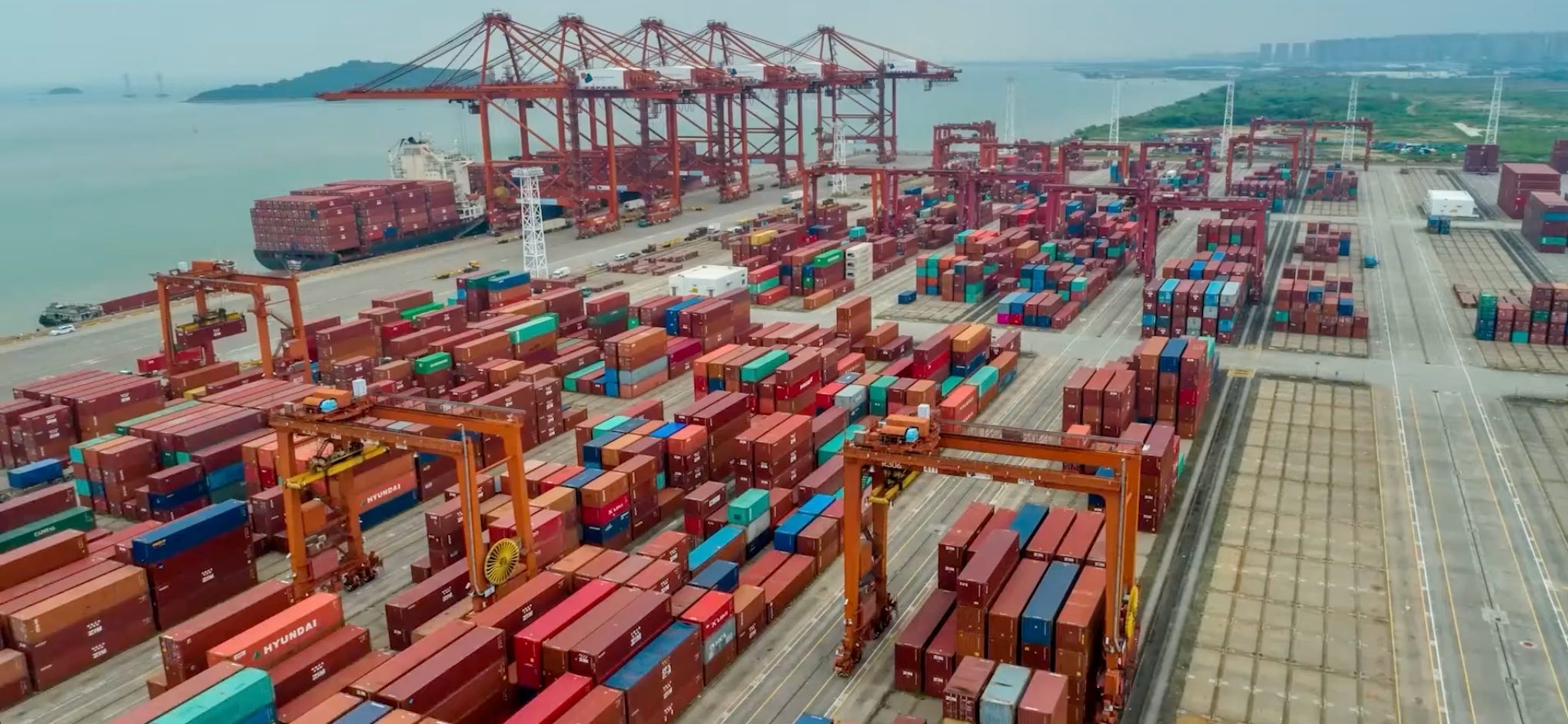
In a landmark shift for Israel’s strategic maritime assets, ZIM Integrated Shipping Services (NYSE:ZIM) is being acquired by a consortium of FIMI Opportunity Funds and German carrier Hapag-Lloyd for $3.7 billion. The deal represents a significant premium over ZIM’s current market cap of $2.7 billion and will result in the company being taken private and delisted from the NYSE.
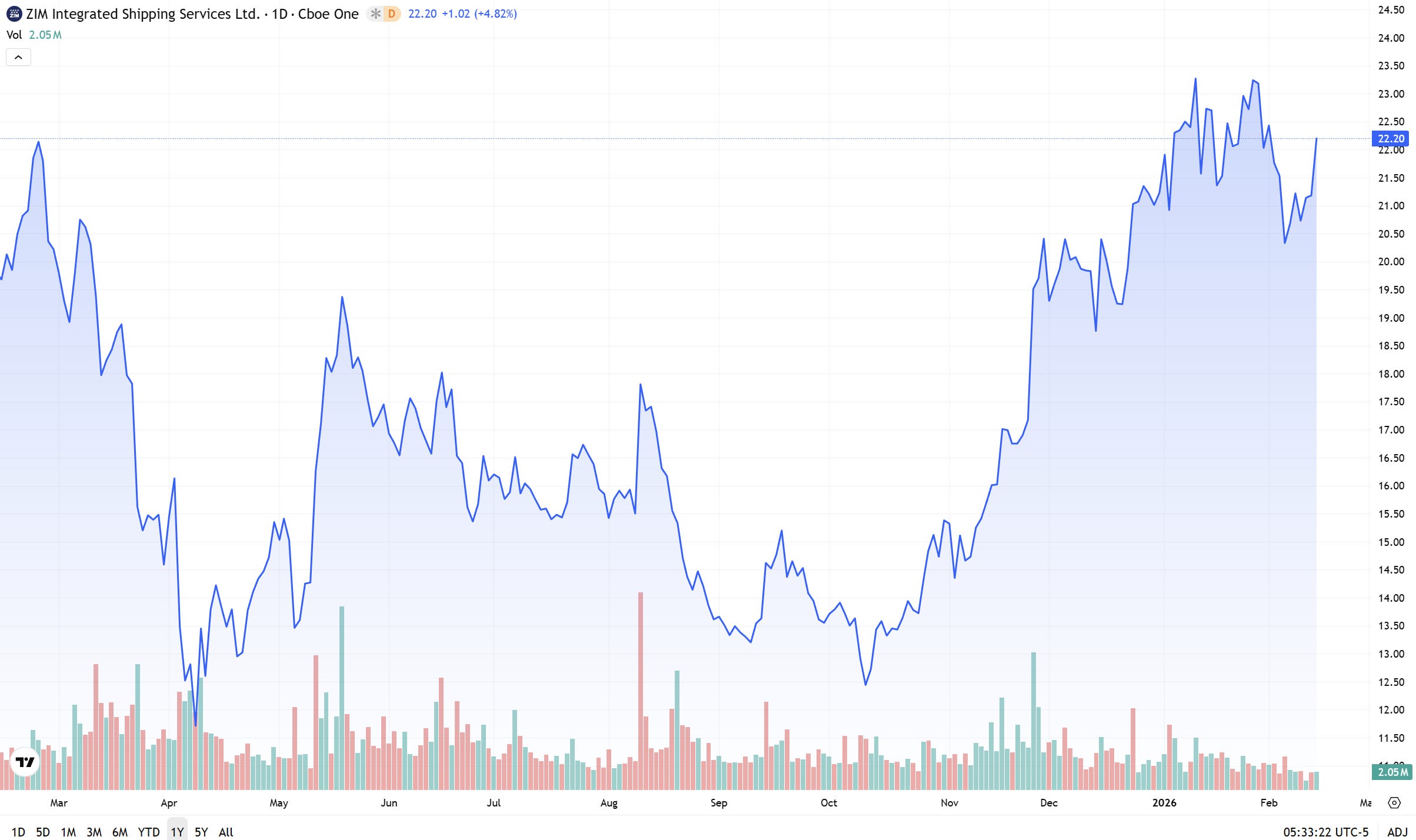
To address regulatory hurdles, the acquisition uses an unconventional split-ownership model:
FIMI Opportunity Funds will take ownership of ZIM’s corporate entity and its 16 fully owned, Israeli-flagged vessels. This ensures that the strategic core of the fleet remains under Israeli private equity control.
Hapag-Lloyd (the world’s 5th largest carrier) will acquire the lease contracts for 99 vessels and ZIM’s lucrative trans-Pacific and intra-Asia routes.
The deal is under intense scrutiny due to its potential impact on national security. The Israeli government holds a Golden Share in ZIM, which grants it veto power over any ownership change exceeding 24%.
Our take: this is a strategic ‘partitioning’ of a national asset. By using FIMI as a buffer for the most sensitive assets, the deal aims to bypass a total government veto while allowing ZIM to integrate into a global network. However, the long-term survival of a smaller, ‘New ZIM’ without the scale of its international routes remains a key point of debate among maritime authorities.
In a major move, the government finalized the National Master Plan for agro-voltaic facilities. This allows for the simultaneous use of land for both solar power generation and active farming without the need for subsidies. The plan includes strict enforcement to ensure that agricultural cultivation remains the primary condition for operating the solar arrays.
Technology - more AI fundraising
Simile, an AI startup founded by Stanford University academics, emerged from stealth with a $100 million funding round led by Index Ventures. Participants include Bain Capital Ventures, Hanabi Capital, and A. The company’s valuation following the funding round has not yet been disclosed. The company builds AI-populated simulations to predict how humans will react to corporate earnings and product launches.
SwayV, an AI startup founded by ARC Sheba Impact and Mediterranean Towers Ventures, raised $1.5 million. The system is designed to bridge the diagnostic gap in routine ECGs, utilizing an AI model trained on 65,000 tests to identify cardiac risks years before an event.
Regulation analysis - cost of living is the word du jour (again)
Minister of Economy Nir Barkat is under fire for his National Product Basket initiative. Despite a ₪50 million incentive for retailers to freeze prices, only one chain participated in the tender, with other supermarket giants sitting it out, saying that capping prices would mean operating at a loss.
Critics of the move, including TV10 Editor Eran Bar-Tal, argue that the program ignores the structural interdependency trap of the Israeli market, specifically high import customs duties and the lack of an independent food distribution system.
The market has effectively vetoed the Minister’s plan, and the reason is found in the unforgiving arithmetic of the retail sector. With net margins currently compressed between 2.5% and 4.5%, the industry is operating at its economic break-even point; at this level, there is zero buffer to absorb external shocks.
From the perspective of the Theory of the Firm, a rational board cannot, and will not, commit to long-term price freezes during an inflationary, post-war recovery. To do so would violate the Shutdown Rule, as any marginal increase in supply chain or labor costs would immediately transform a thin profit into a terminal loss.
In this environment, a government mandate acts as an artificial price ceiling, which, historically, triggers a supply contraction, leading to silent shortages or reduced consumer choice. Authentic price relief cannot be manufactured through government ‘prizes’ or temporary subsidies, which fail to address the underlying deadweight loss of a restricted market.
Instead, sustainable deflation requires supply-side structural deregulation: shifting the supply curve to the right by dismantling import barriers and reducing the regulatory red tape that inflates the cost of doing business.
Until the government focuses on lowering the cost of operations rather than capping the price of goods, the market will continue to reject these interventions as mathematically unfeasible.
TASE snapshot for Monday, Feb. 16, 2026
TA-35 Index (TASE:TA35): 🟢 +0.37%
TA-90 (TASE:TA90): 🟢 +0.76%
TA-125 (TASE:TA125): 🟢 +0.47%
If you enjoyed this update, forward it on.
TV10 Global | Israel for Investors
Bringing you the top stories from the Israeli business community, by Israel’s only business and finance network.
Share your thoughts with us via: global@tv10.co.il or the Newsroom WhatsApp: +972-55-994-5851.
📧 Subscribe to this newsletter! And follow the daily conversation on 𝕏 @tv10global.
Pings available via WhatsApp Channel.
Disclaimer: This brief is for informational purposes only and does not constitute investment advice. All data current as of publication date.


